Inspect Entry & Harborage
Find the drains, gaps, and damp exterior zones (mulch, drains, crawl space) that let roaches in and sustain them.
Pest Education • DFW Pest Control
The big reddish-brown roaches Texans call "water bugs" or "palmetto bugs" are American cockroaches — and for all the panic one causes crossing a kitchen floor at midnight, it almost never actually lives in your house. They come up from drains, mulch, and storm sewers outside. Here's where they really come from, why they wander in, and how to keep them out.
Reviewed and updated June 2026
American cockroaches live outdoors and only visit, pushing into DFW homes through drains, gaps, and worn door sweeps during heat, drought, or heavy rain. Control means sealing entry, drying out moisture, and treating the outdoor harborage they come from — not chasing the one on the floor.
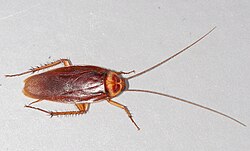
The American cockroach is the largest cockroach commonly found in and around Texas homes, often well over an inch and a half long, glossy reddish-brown, with a pale yellowish band shaped like a figure-8 behind the head. Adults have full wings and can glide short distances, which is why people are startled to see them "fly" off a wall.
Despite the name, they are not native to the Americas and they are not primarily indoor insects. They thrive in warm, humid, dark places with decaying organic matter, and in DFW that usually means sewers, storm drains, grease traps, mulch beds, tree holes, and crawl spaces. Homes are typically a detour, not their headquarters.
Most American cockroach problems start outdoors and move in. During North Texas heat waves, drought, or heavy rain, roaches leave their outdoor harborage and push inside through whatever openings they find.
Because the source is usually outside, the most effective work happens at the perimeter and entry points, not just where you saw the roach.
American cockroaches travel through sewers, drains, and decaying matter, so they can pick up and spread bacteria across surfaces they cross. Their droppings, shed skins, and egg cases also contain allergens that can trigger allergy and asthma symptoms in sensitive people, particularly children.
They rarely bite, but a persistent indoor presence is both a sanitation issue and a sign that there are entry points and moisture conditions worth correcting.
Lasting control of American cockroaches is mostly about denying them moisture and entry, then treating the outdoor harborage and pathways they use. Spraying the occasional indoor roach does little when the population lives outside.
Find the drains, gaps, and damp exterior zones (mulch, drains, crawl space) that let roaches in and sustain them.
Seal entry points and reduce moisture, then treat the perimeter and harborage rather than just indoor sightings.
Explore services →Maintain drain seals, door sweeps, and foundation gaps so new roaches can’t re-enter.
Request an estimate →Treatments are selected and applied per their labels. Tell us about children, pets, edible gardens, and other sensitive areas before service, and follow all preparation and re-entry instructions. More on pet- and pollinator-conscious treatment →
In Texas, "water bug" and "palmetto bug" are common nicknames for the American cockroach. They are the same large reddish-brown roach most people find coming up from drains, sewers, and damp areas.
American cockroaches usually live outdoors in sewers, storm drains, mulch, and tree holes, then wander inside through drains, gaps, and door sweeps, especially in heat or after rain. A clean home can still see them because the source is often outside.
They can carry bacteria from the unsanitary areas they travel through, and their droppings and shed skins can trigger allergies and asthma in some people. Reducing them and sealing entry points lowers that exposure.
Guidance changes over time. Follow current product labels and local recommendations. This page is educational and is not medical advice.
Call or email for a free estimate. We’ll recommend an approach that fits your property.