Inspect & Monitor
Use sticky monitors to find harborage near appliances, cabinets, and plumbing.
Pest Education • DFW Pest Control
If you spot small, light-brown roaches on a kitchen counter after dark — especially in a DFW apartment, duplex, or rental — they're almost always German cockroaches. They breed indoors all year, Texas heat or not, and a few sightings can become hundreds. Here's why they move so fast and what actually stops them.
Reviewed and updated June 2026
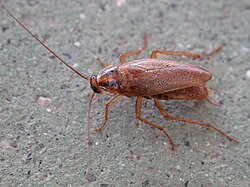
German cockroaches live and breed entirely indoors, packing into the warm, damp gaps of kitchens and bathrooms. You beat them with sanitation, gel bait, and sealing them out — not spray, which scatters the group and leaves the egg cases behind.
The German cockroach is the one behind most indoor roach problems in DFW homes and apartments — small, light brown, with two dark stripes behind the head. It's a poor survivor outdoors in North Texas, so unlike the big American cockroach you find near drains and garages, this one stays inside where it's warm and fed.
By day they pack into cracks close to heat and water: behind the refrigerator, under the sink, along cabinet seams and the hinge side of a dishwasher. They come out at night to feed. Find the harborage and you've found the infestation.
No house-infesting roach breeds like this one. Each egg case carries dozens of eggs, the female carries it until it's nearly ready to hatch — so fewer are lost — and generations overlap. That's how a couple of roaches behind the toaster turn into a wall-to-wall problem in a few weeks.
Store-bought spray is the classic way to make this worse: it kills a few, splits the rest into new hiding spots, and never reaches the eggs. Lasting control stacks four things — sanitation, gel bait, growth regulators, and sealing the gaps they hide in — then repeats until the monitors stay empty.
Use sticky monitors to find harborage near appliances, cabinets, and plumbing.
Target baits and growth regulators where roaches live, alongside sanitation and leak repair.
Explore services →Re-treat to catch newly hatched roaches and confirm the population is gone.
Request an estimate →Treatments are selected and applied per their labels. Tell us about children, pets, edible gardens, beehives, and other sensitive areas before service, and follow all preparation and re-entry instructions. More on pet- and pollinator-conscious treatment →
They often arrive in groceries, boxes, secondhand appliances, or furniture, and in apartments they spread between units. Cleanliness helps a lot, but the source is often something brought in.
Usually not on their own. Sprays can scatter the population and miss the eggs. A combination of gel baits, growth regulators, sanitation, and follow-up works far better.
Because eggs are protected and the roaches breed quickly, it commonly takes several weeks and more than one treatment to fully clear an established infestation.
Guidance changes over time. Follow current product labels and local recommendations. This page is educational and is not medical advice.
Call or email for a free estimate. We’ll recommend an approach that fits your property.