Pest Education • DFW Pest Control
Cicadas in DFW
Cicadas fill North Texas summers with sound, but they don't bite, sting, or infest your home. Here's what to know.
Reviewed and updated June 2026
At a Glance
Cicadas are loud summer insects that do not bite or sting and do not infest homes. They need no pest treatment.
Quick Facts
- Sound: Loud summer 'song' from males
- Harm: Do not bite or sting people or pets
- Lifecycle: Nymphs develop underground for years
- Concern: Minor twig damage from egg-laying at most
What Are Cicadas?
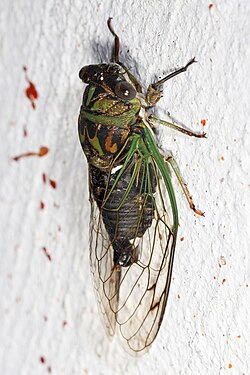
Cicadas are large insects best known for the loud buzzing 'song' males produce on hot summer days. North Texas has annual cicadas every year, with nymphs developing underground on tree roots for years before emerging.
They do not bite or sting, do not infest homes, and are not a household pest. The shed exoskeletons left on trees and fences are harmless.
Do Cicadas Need Control?
Cicadas require no pest treatment. The only minor effect is on plants, when females slit small twigs to lay eggs, which can occasionally cause 'flagging' on young trees.
- No home treatment is warranted for cicadas.
- Protect very young or newly planted trees during heavy emergence if desired.
- Established trees easily tolerate normal cicada egg-laying.
- Pets may eat a few cicadas; this is generally harmless in small amounts.
Treatments are selected and applied per their labels. Tell us about children, pets, edible gardens, beehives, and other sensitive areas before service, and follow all preparation and re-entry instructions. More on pet- and pollinator-conscious treatment →
Common Questions
Are cicadas harmful?
No. Cicadas do not bite or sting people or pets and do not infest homes. They are loud but harmless.
Do I need pest control for cicadas?
No. Cicadas need no treatment. At most, females may slit small twigs to lay eggs, which can lightly affect very young trees.
Why are cicadas so loud?
Male cicadas produce their loud song to attract mates, especially on hot summer days. It is a normal part of North Texas summers.
Sources & Further Reading
Guidance changes over time. Follow current product labels and local recommendations. This page is educational and is not medical advice.
Have a Pest Question?
Call or email for a free estimate. We’ll recommend an approach that fits your property.