Inspect
Look for mud tubes, damaged wood, and swarmers around the foundation and interior.
Pest Education • DFW Pest Control
Subterranean termites quietly cause serious structural damage in North Texas. Learn the warning signs and why a professional inspection matters.
Reviewed and updated June 2026
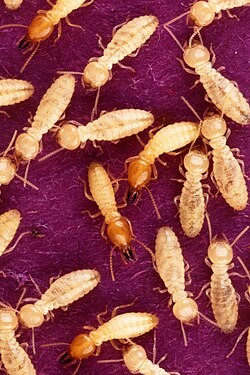
Subterranean termites are the most destructive wood pest in Texas. They build mud tubes from soil to wood and can damage a home before they are noticed.
Subterranean termites are the most common and most destructive termites in North Texas. They live in large underground colonies and travel to wood through the soil, building protective mud tubes across foundations and slabs.
They feed on the cellulose in wood and other materials, often hollowing out structural wood from the inside while leaving a thin surface intact, which is why damage can go unseen for a long time.
Because termites work out of sight, the signs are often subtle. Catching them early limits the damage.
Termite control is specialized work that depends on correctly identifying the species, locating the colony's access points, and applying soil treatments or baiting systems according to strict label and code requirements.
If you suspect termites, the most important step is a thorough professional inspection. We can help you understand what to look for and recommend the right next step for your property.
Look for mud tubes, damaged wood, and swarmers around the foundation and interior.
Confirm activity and conducive conditions like moisture and wood-to-soil contact.
Explore services →Get a professional recommendation matched to the structure and findings.
Request an estimate →Treatments are selected and applied per their labels. Tell us about children, pets, edible gardens, beehives, and other sensitive areas before service, and follow all preparation and re-entry instructions. More on pet- and pollinator-conscious treatment →
Termite swarmers have straight antennae, equal-length wings, and a thick waist; flying ants have bent antennae, unequal wings, and a pinched waist. Discarded wings near windows are a common termite sign.
A mature colony can cause significant structural damage over time, often before it is noticed, which is why early detection and professional treatment matter.
Moisture, wood-to-soil contact, mulch against the foundation, leaks, and poor drainage all make a structure more attractive and accessible to subterranean termites.
Guidance changes over time. Follow current product labels and local recommendations. This page is educational and is not medical advice.
Call or email for a free estimate. We’ll recommend an approach that fits your property.