Inspect the Property
Locate mounds, foraging trails, sunny turf, and the areas where stings are most likely to affect your family.
Pest Education • DFW Pest Control
Red imported fire ants are one of the most aggressive yard pests in North Texas. Learn how their colonies work, why their stings hurt, and what actually reduces mounds around a home.
Reviewed and updated June 2026
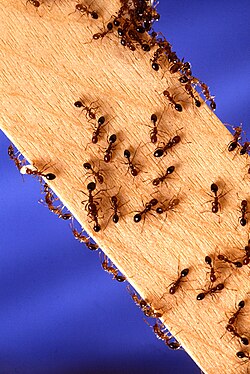
Learn how red imported fire ants build mounds, why they thrive in North Texas, the risk of their stings, and how to reduce them around a DFW property.
Red imported fire ants are an invasive species that has spread across most of Texas. They build loose, dome-shaped dirt mounds in sunny areas of lawns, along driveways and sidewalks, near foundations, and in landscape beds. Mounds often appear or grow quickly after rain.
A single colony can contain tens of thousands of ants, and some areas have multiple-queen colonies that produce mounds close together. When a mound is disturbed, workers pour out and sting in numbers, which is what makes them such a problem in yards where children and pets play.
The DFW climate of warm seasons, periodic rain, and irrigated lawns suits fire ants well. Disturbed soil, open sunny turf, and reliable moisture from sprinkler systems all encourage mound building.
The most reliable approach combines a broadcast bait that foraging ants carry back to the queen with targeted treatment of individual mounds. Treating only the mounds you can see often causes colonies to relocate rather than die out.
Because reinfestation from adjacent yards is common, fire ant control usually works best as a planned, area-wide program rather than a one-time spot treatment.
Locate mounds, foraging trails, sunny turf, and the areas where stings are most likely to affect your family.
Colony type, season, weather, and sensitive areas should shape the bait and product plan.
Explore services →Scheduled follow-up and moisture management help keep mounds from returning.
Request an estimate →Products should be selected and applied according to their labels. Tell us about pets, beehives, butterfly gardens, edible plants, ponds, play areas, or other sensitive locations so treatment timing and placement can be planned responsibly.
Keep people and pets out of treated areas for the time specified on the label and follow all preparation and re-entry instructions.
Disturbing a mound without reaching the queen often causes the colony to relocate nearby. Reinfestation from neighboring yards is also common. Broadcast baits and area-wide programs tend to give more lasting results than treating single mounds.
Most stings cause a burning welt and a small pustule. Some people have severe allergic reactions, and anyone with signs of a serious reaction such as difficulty breathing or swelling needs immediate medical care.
Spring and fall, when ants are actively foraging and temperatures are moderate, are often the most effective times for baiting. Treatment can still help at other times, but timing and product choice matter.
Guidance changes over time. Follow current product labels and local recommendations. This page is educational and is not medical advice.
Call or email for a free estimate. We’ll recommend an approach that fits your property.