Inspect & Monitor
Place sticky traps and check storage, closets, and attics for activity.
Pest Education • DFW Pest Control
Brown recluse spiders hide in quiet, undisturbed indoor spaces. Learn how to identify them, where they live, and how to reduce them.
Reviewed and updated June 2026
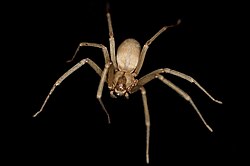
The brown recluse is a venomous spider that hides in undisturbed indoor areas like closets, boxes, and storage. Decluttering and exclusion are key to control.
The brown recluse is a venomous spider found in parts of Texas. It is tan to brown with a darker violin-shaped marking behind the head and, unlike most spiders, has six eyes arranged in three pairs.
As the name suggests, it is reclusive. It avoids activity and hides in quiet, dark, undisturbed places, often indoors.
Most brown recluse bites happen when the spider is pressed against skin, such as in stored clothing, shoes, or bedding.
Control centers on reducing the undisturbed clutter they hide in, sealing entry points, and monitoring with traps.
Place sticky traps and check storage, closets, and attics for activity.
Reduce harborage, switch to sealed bins, and seal entry points.
Explore services →Target harborage areas and reduce prey insects to lower numbers.
Request an estimate →Treatments are selected and applied per their labels. Tell us about children, pets, edible gardens, beehives, and other sensitive areas before service, and follow all preparation and re-entry instructions. More on pet- and pollinator-conscious treatment →
Look for a tan-to-brown spider with a violin-shaped mark behind the head and six eyes in three pairs. Many harmless spiders are misidentified as recluses, so identification matters.
Clean the area, apply a cool compress, and seek medical attention, especially if a wound develops or you feel unwell. If possible, safely save the spider for identification.
Reduce clutter, use sealed plastic storage bins, shake out clothing and shoes, seal cracks and gaps, and monitor with sticky traps.
Guidance changes over time. Follow current product labels and local recommendations. This page is educational and is not medical advice.
Call or email for a free estimate. We’ll recommend an approach that fits your property.