Inspect
Check harborage outdoors and entry points like weep holes and door sweeps.
Pest Education • DFW Pest Control
The striped bark scorpion is the one most Texans encounter. Learn where it hides, why it slips indoors, and how exclusion keeps it out.
Reviewed and updated June 2026
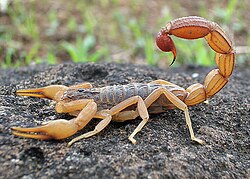
The striped bark scorpion hides under rocks, bark, and debris and slips indoors through small gaps. Exclusion and harborage reduction are the keys to control.
The striped bark scorpion is the species most people encounter in North Texas. It is tan with two darker stripes down the back and is usually a couple of inches long.
Scorpions are nocturnal hunters that hide during the day and glow under ultraviolet light, which is how they are often located at night.
Scorpions follow prey insects and seek shelter from heat and dryness, which can bring them inside through surprisingly small gaps.
Scorpions are hard to kill with sprays alone, so control emphasizes exclusion and removing harborage and prey.
Check harborage outdoors and entry points like weep holes and door sweeps.
Seal gaps and remove woodpiles, rocks, and debris near the home.
Explore services →Lower the insect population scorpions hunt and treat harborage.
Request an estimate →Treatments are selected and applied per their labels. Tell us about children, pets, edible gardens, beehives, and other sensitive areas before service, and follow all preparation and re-entry instructions. More on pet- and pollinator-conscious treatment →
For most healthy adults the sting is painful but not dangerous, similar to a wasp sting. Reactions vary, so seek medical care for severe symptoms, allergic reactions, or stings to young children.
They follow prey insects and seek shelter from heat and dryness, entering through weep holes, door sweeps, and small gaps. Reducing entry points and prey helps the most.
Yes. Scorpions glow under ultraviolet light, so a UV flashlight at night is a useful way to find and remove them and identify harborage.
Guidance changes over time. Follow current product labels and local recommendations. This page is educational and is not medical advice.
Call or email for a free estimate. We’ll recommend an approach that fits your property.