Learn how eastern equine encephalitis virus spreads, why people and horses are dead-end hosts, which symptoms require care, and how to prevent mosquito bites.
At a Glance
- Cause: Eastern equine encephalitis virus
- Spread: Bites from infected mosquitoes
- Natural cycle: Birds and mosquitoes
- Key prevention: Avoid bites and reduce breeding water
What Is Eastern Equine Encephalitis?
Eastern equine encephalitis, often shortened to EEE, is a rare disease caused by eastern equine encephalitis virus. Most infected people do not develop severe neurologic disease, but encephalitis or meningitis can be devastating when it occurs.
Because case numbers and affected locations change from year to year, current public-health reporting is more useful than old maps or historical averages.
How EEE Virus Spreads
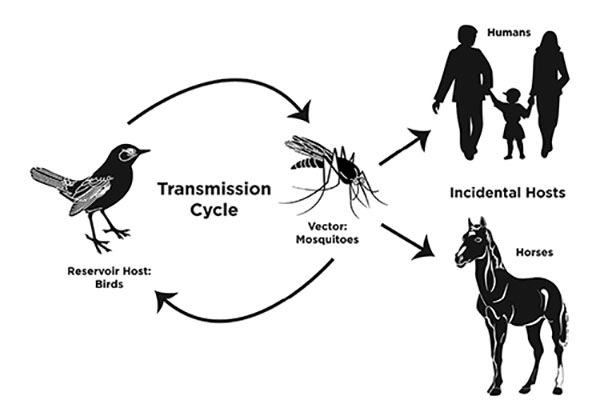
The virus is maintained primarily in a cycle between birds and mosquitoes in and around freshwater hardwood swamps. Culiseta melanura is an important mosquito in that bird cycle and generally does not prefer people.
Other mosquito species can act as bridge vectors after feeding on infected birds, carrying the virus beyond the bird cycle to people, horses, and other mammals.
People and Horses Are Dead-End Hosts
People and horses generally do not develop enough virus in the bloodstream to infect new mosquitoes. That is why they are called dead-end hosts.
EEE is not spread through ordinary person-to-person contact. The relevant exposure is the bite of an infected mosquito.
Where and When Risk Occurs
EEE virus activity has been reported in eastern, Gulf Coast, and Great Lakes areas of the United States, with patterns that vary by year. Risk is influenced by mosquito populations, bird infections, weather, habitat, and surveillance findings.
The presence of mosquitoes does not mean EEE virus is circulating. Follow local and state health-department notices for current activity rather than relying on a permanent list of 'safe' or 'unsafe' states.
Symptoms and When to Seek Care
Symptoms can begin several days after an infected mosquito bite. Illness may include fever, headache, chills, vomiting, body or joint aches, and fatigue. Severe disease can involve confusion, seizures, encephalitis, or meningitis.
About 30 percent of people who develop EEE die, and many survivors have ongoing neurologic problems. Seek urgent medical care for severe headache, confusion, seizures, weakness, or other neurologic symptoms. There is no vaccine or specific antiviral treatment for people; medical care is supportive.
How to Reduce Risk
Use an EPA-registered insect repellent according to its label, wear long sleeves and pants when practical, repair screens, and limit exposure when mosquitoes are most active.
Empty or manage standing water every week. Professional mosquito control can reduce activity around a property, but no treatment can guarantee that a person will not be bitten or become ill.
- Choose a registered repellent appropriate for the user and activity.
- Keep doors, windows, and screens in good repair.
- Empty, cover, scrub, or properly treat water-holding containers.
- Check current local public-health guidance during mosquito season.
Quick Tip
Avoid old case-count maps when judging today's risk. Mosquito and virus activity changes, so use current county, state, and CDC updates.
Common Questions
Can EEE spread from one person to another?
EEE is not spread through ordinary person-to-person contact. People are generally dead-end hosts and do not produce enough virus in the blood to continue the mosquito transmission cycle.
Does every mosquito carry EEE virus?
No. A mosquito must first become infected. EEE virus activity varies by location, season, mosquito species, and year.
Is there an EEE vaccine for people?
No human vaccine is currently available. Horse owners should ask a veterinarian about equine vaccination.
When should I seek medical help?
Contact a healthcare professional for concerning illness after mosquito exposure and seek urgent care for severe headache, confusion, seizures, weakness, or other neurologic symptoms.
Sources & Further Reading
- CDC: About Eastern Equine Encephalitis
- CDC: About Mosquitoes
- EPA: Find the Repellent That Is Right for You
- Texas DSHS: Mosquito-Borne Diseases
Public-health guidance changes. Follow current local, state, and federal recommendations. This article is educational and is not medical advice.
When to Call a Professional
If weekly water removal, screens, fans, and personal repellent are not enough, a professional inspection can identify breeding sites, resting habitat, and the service option that best fits the property.
Need mosquito control? Call 817-717-3663 or email info@tacticalmosquitocontrol.com for a free estimate.