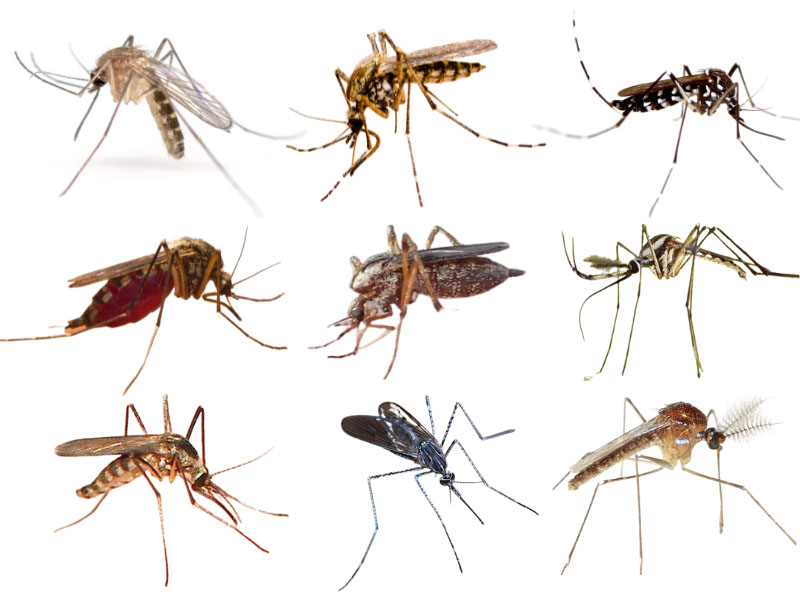
Meet the common mosquito groups found in Texas, including Culex, Aedes, Anopheles, and floodwater mosquitoes, and learn why identification changes the control plan.
At a Glance
- Daytime biters: Aedes aegypti and Asian tiger mosquitoes
- Nighttime biters: Culex and many Anopheles mosquitoes
- After heavy rain: Floodwater Aedes and Psorophora
- Why it matters: Species behavior changes the best control method
Why Texas Has So Many Kinds of Mosquitoes
Texas combines warm seasons, urban containers, irrigated landscapes, river bottoms, coastal marshes, stormwater systems, and flood-prone areas. Those habitats support mosquitoes with very different life cycles.
The word breed is commonly used, but species or mosquito group is more accurate. This guide focuses on the mosquitoes Texans are most likely to encounter rather than attempting to list every species recorded in the state.
Culex: Southern House and Related Mosquitoes
Culex mosquitoes are usually most active from dusk through dawn. The southern house mosquito, Culex quinquefasciatus, is especially important in Texas because members of this group can maintain West Nile virus in bird populations and occasionally transmit it to people and horses.
Females often lay egg rafts on standing water rich in organic material. Storm drains, neglected pools, clogged gutters, ditches, and containers can all contribute.
- Typical timing: evening and nighttime.
- Common habitat: stagnant or nutrient-rich water.
- Control priority: drainage, pool and gutter maintenance, screens, and nighttime bite prevention.
Aedes aegypti: The Yellow Fever Mosquito
Aedes aegypti is a dark, white-marked container mosquito that lives closely around people. It often bites during the day and lays drought-resistant eggs on the inside walls of buckets, plant saucers, toys, rain barrels, and other containers.
It can transmit dengue, Zika, chikungunya, and yellow fever where those pathogens are present. Finding the mosquito does not mean those diseases are circulating locally.
- Typical timing: daytime, often morning and late afternoon.
- Common habitat: human-made containers near homes.
- Control priority: empty and scrub containers every week.
Aedes albopictus: The Asian Tiger Mosquito
The Asian tiger mosquito is recognized by black-and-white legs and one white stripe down the center of the thorax. It is an aggressive daytime biter and uses both artificial containers and natural cavities such as tree holes.
Because it often remains relatively close to its breeding sites, containers on your property and neighboring lots can strongly influence the pressure in a yard.
- Typical timing: daytime.
- Common habitat: shaded containers and small cavities.
- Control priority: coordinated container cleanup plus targeted adult control when needed.
Floodwater Mosquitoes: Aedes vexans and Psorophora
Heavy rain can trigger large hatches of floodwater mosquitoes. Their eggs are laid on damp soil in areas that periodically flood, then hatch when water rises. Aedes vexans is widespread, while several large, aggressive Psorophora species also occur in Texas.
These mosquitoes may fly farther than container-breeding Aedes, so a sudden surge does not always mean the breeding source is in your own yard.
- Typical timing: often strongest after rain and flooding.
- Common habitat: temporary pools, low fields, ditches, and floodplains.
- Control priority: regional monitoring, temporary-water management where practical, and bite protection.
Anopheles: Native Night-Biting Mosquitoes
Several Anopheles species occur in Texas. Adults often rest with the body angled away from the surface, while larvae lie parallel to the water surface.
Only Anopheles mosquitoes can transmit human malaria parasites, but their presence alone does not indicate local malaria transmission. Most U.S. malaria cases are associated with travel, although rare local transmission can occur.
- Typical timing: dusk, night, and dawn.
- Common habitat: varies by species and can include shallow pools, marsh edges, and vegetated water.
- Control priority: habitat inspection, screens, repellents, and targeted management.
Matching the Mosquito to the Solution
A daytime mosquito emerging from patio containers calls for a different plan than a nighttime Culex mosquito coming from stormwater habitat or a floodwater hatch after a major rain.
Track when and where bites occur, inspect water sources, and use that evidence to guide treatment. Species-level identification may require a trained professional or mosquito-control laboratory.
- Daytime biting: inspect containers and dense shade first.
- Dusk and nighttime biting: inspect drains, pools, gutters, and screens.
- Sudden post-rain outbreak: consider nearby floodwater habitat.
- Persistent mixed activity: combine source reduction, personal protection, and a site-specific professional plan.
Quick Tip
Track the time and place where bites occur. Daytime activity, nighttime activity, and sudden post-rain outbreaks often point to different mosquito groups and different solutions.
Common Questions
What is the most common mosquito in Texas?
There is no single answer for every location or season. Culex, container-breeding Aedes, and floodwater mosquitoes can each dominate under different conditions.
Which Texas mosquitoes bite during the day?
Aedes aegypti and Aedes albopictus are the best-known daytime biters. Other species may also bite outside their peak periods.
Can I identify a mosquito by its bite?
Biting time and location provide clues, but they do not confirm a species. Clear markings, larval habitat, and expert examination are more reliable.
Why do mosquitoes suddenly get worse after rain?
Floodwater eggs can hatch in large numbers when low areas fill. Rain also creates new containers and standing-water habitats around homes.
Sources & Further Reading
Public-health guidance changes. Follow current local, state, and federal recommendations. This article is educational and is not medical advice.
When to Call a Professional
If weekly water removal, screens, fans, and personal repellent are not enough, a professional inspection can identify breeding sites, resting habitat, and the service option that best fits the property.
Need mosquito control? Call 817-717-3663 or email info@tacticalmosquitocontrol.com for a free estimate.