
Inspect the Property
Find breeding water, shaded resting habitat, drainage problems, and the places mosquito activity affects you most.
Pest Education • DFW Mosquito Control
The Asian tiger mosquito, Aedes albopictus, is a bold daytime biter recognized by a single white stripe down the center of its dark thorax.
Reviewed and updated June 2026
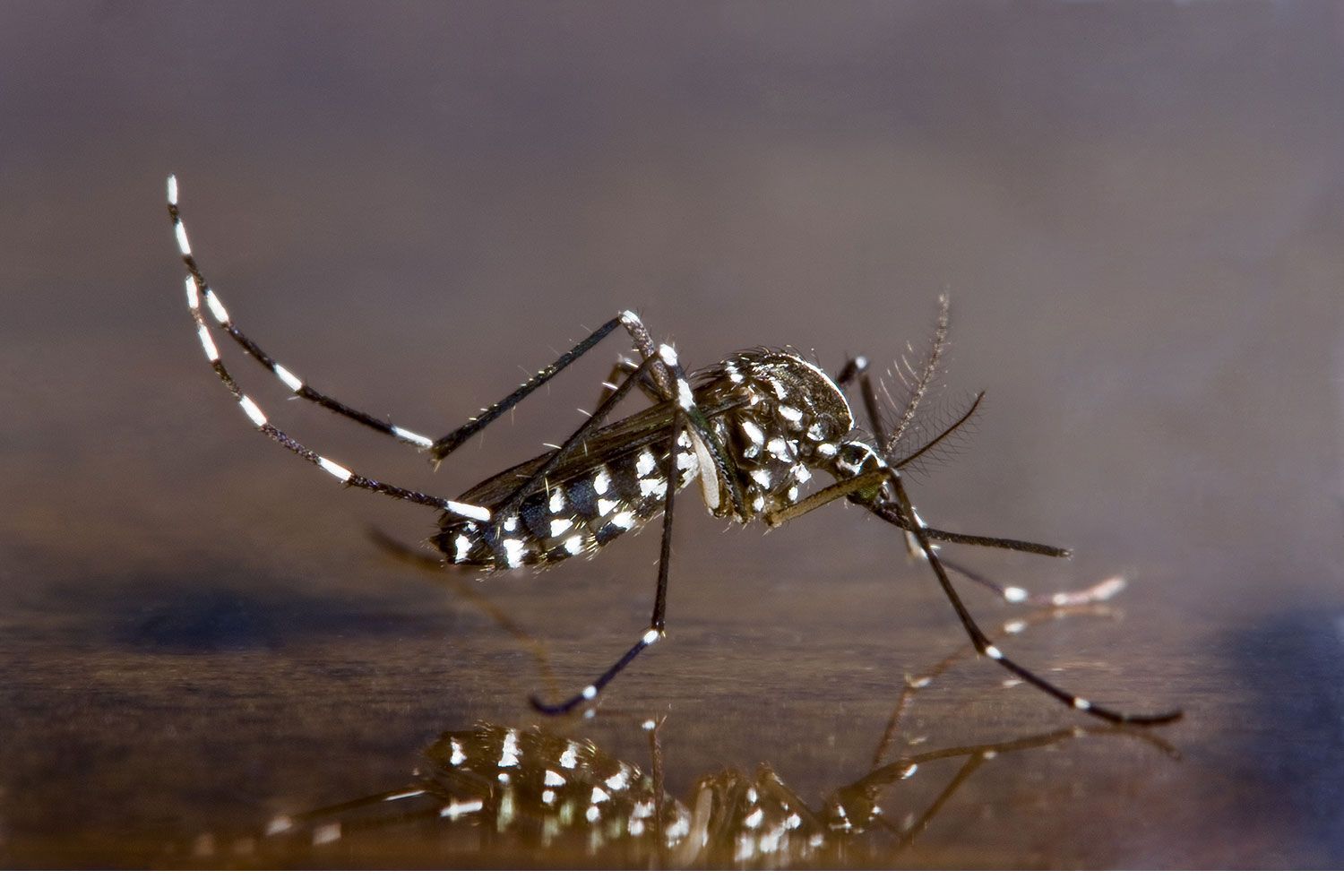
Learn to identify Aedes albopictus, understand its daytime biting and container breeding, and reduce Asian tiger mosquitoes around a DFW yard.
Aedes albopictus is an invasive container mosquito now established across much of the southeastern United States. Its black-and-white legs and single white thorax stripe are useful field clues.
It feeds on people and a variety of animals. Because it often remains fairly close to container habitats, conditions on a property and nearby lots can strongly affect local activity.
Females lay drought-resistant eggs on container walls just above the waterline. Shaded buckets, toys, saucers, tires, clogged gutters, corrugated drainpipe, and even small cavities can produce mosquitoes.
Aedes albopictus is capable of transmitting pathogens including chikungunya and dengue under the right conditions. Its public-health importance varies by place and outbreak. Presence alone does not mean a mosquito is infected.
A successful plan targets both immature and adult mosquitoes. Remove containers first, use label-approved larval control for water that cannot be emptied, and address shaded resting areas when adult pressure warrants it.
Nighttime-only approaches may miss a mosquito that is active during the day, so monitoring and treatment timing should match the species.
Find breeding water, shaded resting habitat, drainage problems, and the places mosquito activity affects you most.
Species, timing, weather, neighboring pressure, and sensitive areas should shape the plan.
Explore services →Weekly source reduction and personal bite protection support any professional treatment.
Request an estimate →Products should be selected and applied according to their labels. Tell us about pets, beehives, butterfly gardens, edible plants, ponds, play areas, or other sensitive locations so treatment timing and placement can be planned responsibly.
Keep people and pets out of treated areas for the time specified on the label and follow all preparation and re-entry instructions.
Asian tiger mosquitoes have a single white stripe down the thorax; Aedes aegypti has a more complex lyre-shaped pale pattern.
Aedes albopictus is naturally active during daylight, often with stronger activity in the morning and late afternoon.
They often stay relatively close to breeding sites, but movement varies. That makes nearby containers especially important to inspect.
Public-health guidance changes. Follow current local, state, and federal recommendations. This page is educational and is not medical advice.
Call or email for a free estimate. We’ll recommend an approach that fits your property.