Explore mosquito anatomy, the egg-to-adult life cycle, how females locate hosts, and the features experts use for identification.
At a Glance
- Body regions: Head, thorax, abdomen
- Life stages: Egg, larva, pupa, adult
- Biting: Only females take blood meals
- Identification: Scales, palps, legs, posture, larvae
Head: Sensing and Feeding
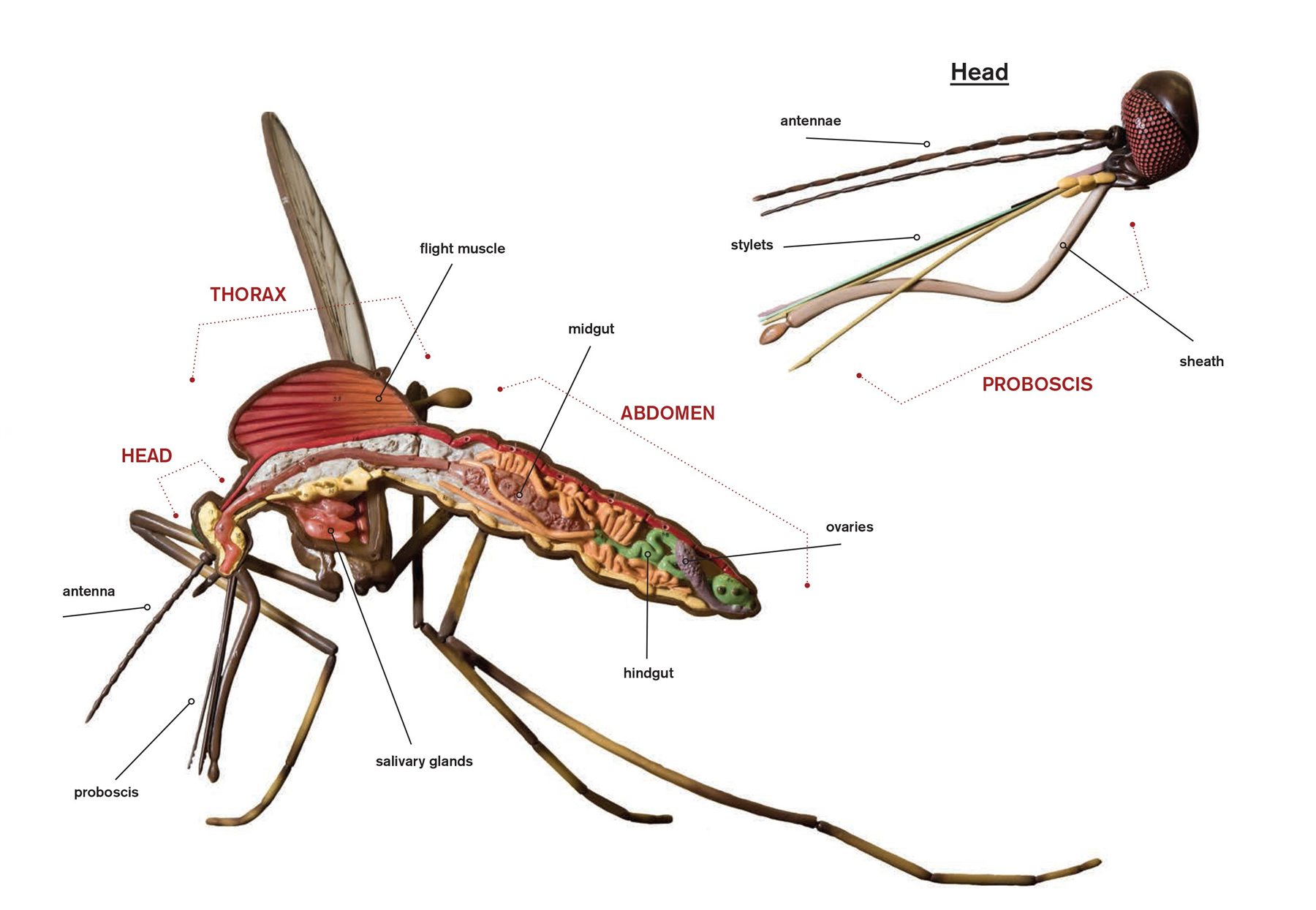
The head carries compound eyes, antennae, palps, and the proboscis. Females use multiple sensors to locate hosts. The visible proboscis contains specialized mouthparts that pierce skin and draw blood.
Male antennae are often noticeably bushier. Males feed on plant sugars; females also use plant sugars, but many species require a blood meal to develop eggs.
Thorax: Movement
The thorax supports one pair of functional wings, three pairs of legs, and small balancing organs called halteres. Flight muscles are concentrated here.
Wing scales, leg banding, and other markings help specialists distinguish mosquito groups and species.
Abdomen: Breathing and Reproduction
The abdomen contains much of the digestive and reproductive system. Openings called spiracles connect to internal air tubes. After a blood meal, a female's abdomen can expand substantially as digestion and egg development proceed.
The Four-Stage Life Cycle
Mosquitoes undergo complete metamorphosis: egg, aquatic larva, aquatic pupa, and flying adult. Development speed depends on species, temperature, food, and habitat.
Source reduction and larval control target mosquitoes before they become biting adults. Adult control targets mosquitoes that are already flying or resting.
Quick Tip
Track the time and place where bites occur. Daytime activity, nighttime activity, and sudden post-rain outbreaks often point to different mosquito groups and different solutions.
Common Questions
Do male mosquitoes bite?
No. Male mosquitoes do not take blood meals; they feed on plant sugars.
Why do only females bite?
Females of many species use nutrients from blood to produce eggs, although they also feed on plant sugars.
Can you identify a mosquito from a photo?
Sometimes to a broad group, but species-level identification often requires a clear specimen and microscopic features.
Sources & Further Reading
Public-health guidance changes. Follow current local, state, and federal recommendations. This article is educational and is not medical advice.
When to Call a Professional
If weekly water removal, screens, fans, and personal repellent are not enough, a professional inspection can identify breeding sites, resting habitat, and the service option that best fits the property.
Need mosquito control? Call 817-717-3663 or email info@tacticalmosquitocontrol.com for a free estimate.