Inspect
Find where the pest is entering, breeding, or harboring on the property.
Pest Education • DFW Pest Control
The huge wasp dive-bombing your lawn in summer is likely a cicada killer, alarming but nearly harmless. Learn what to do.
Reviewed and updated June 2026
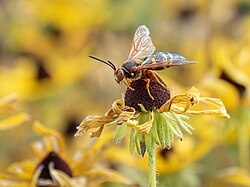
Cicada killers are large solitary wasps that burrow in bare, sunny soil. They rarely sting people, and lawn care usually solves the nuisance.
Cicada killers are among the largest wasps in Texas and look alarming, but they are solitary and not aggressive toward people. Males are territorial and may buzz close, but they have no stinger; females can sting but rarely do unless handled.
Females dig burrows in bare, sunny, well-drained soil, provisioning each with a paralyzed cicada for their young, which is where the name comes from.
Because they are beneficial and barely a threat, the goal is usually to make the lawn less inviting for burrowing rather than aggressive treatment.
Find where the pest is entering, breeding, or harboring on the property.
Match the approach to the pest and conditions, not just the ones you see.
Explore services →Reduce moisture, food, and entry points so the problem does not come back.
Request an estimate →Treatments are selected and applied per their labels. Tell us about children, pets, edible gardens, beehives, and other sensitive areas before service, and follow all preparation and re-entry instructions. More on pet- and pollinator-conscious treatment →
Rarely. Males that patrol cannot sting, and females sting only if handled. They are far less of a threat than yellow jackets or hornets.
Females burrow in bare, sunny, sandy soil to nest. Thickening the turf and covering bare patches makes the area less attractive.
Often not. Improving the lawn usually resolves it. Treatment is reserved for heavy activity in high-traffic areas.
Guidance changes over time. Follow current product labels and local recommendations. This page is educational and is not medical advice.
Call or email for a free estimate. We’ll recommend an approach that fits your property.