Locate & Assess
Identify the nest location and size and the safest approach.
Pest Education • DFW Pest Control
The large gray paper nests hanging in trees and on homes are usually bald-faced hornets. Learn why they're aggressive and how to handle nests safely.
Reviewed and updated June 2026
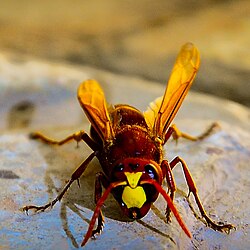
Bald-faced hornets build large aerial paper nests and defend them aggressively. Because nests are big and exposed, removal is best left to professionals.
The large gray, football-shaped paper nests seen hanging in trees, shrubs, and on eaves belong to the bald-faced hornet, which is actually a type of yellowjacket. Adults are black with a white face and markings.
A single nest can grow to the size of a basketball and house hundreds of workers by late summer.
Bald-faced hornets aggressively defend their nest and can sting repeatedly without losing the stinger.
An exposed aerial nest is dangerous to disturb. The safest approach is professional removal, especially for large or hard-to-reach nests.
Identify the nest location and size and the safest approach.
Professional removal handles large, defensive aerial nests safely.
Explore services →Check common nesting spots through the season and reduce attractants.
Request an estimate →Treatments are selected and applied per their labels. Tell us about children, pets, edible gardens, beehives, and other sensitive areas before service, and follow all preparation and re-entry instructions. More on pet- and pollinator-conscious treatment →
Not exactly. Despite the name, the bald-faced hornet is a type of yellowjacket. It builds the large gray aerial paper nests people associate with hornets.
Bald-faced hornets defend their nest aggressively and can sting repeatedly. A nest near walkways, doors, or play areas, or any nest if someone is allergic, should be removed professionally.
It is not advisable. Disturbing an exposed nest invites mass stinging. Professional removal is the safe option, especially for large or elevated nests.
Guidance changes over time. Follow current product labels and local recommendations. This page is educational and is not medical advice.
Call or email for a free estimate. We’ll recommend an approach that fits your property.