Locate Nests
Find nests under eaves, rails, and in voids before they grow.
Pest Education • DFW Pest Control
Paper wasps build umbrella-shaped nests under eaves and rails. Learn when they help, when they sting, and how to handle nests safely.
Reviewed and updated June 2026
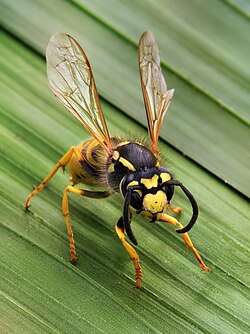
Paper wasps are common stinging insects that nest under eaves and overhangs. They help control other pests but defend nests, so placement near doors matters.
Paper wasps are slender, long-legged wasps that build the familiar open, umbrella-shaped nests under eaves, soffits, railings, and in shrubs. They are common across North Texas in the warm months.
They are actually beneficial in the garden, hunting caterpillars and other insects, and are not generally aggressive away from the nest.
Wasps defend their nest, so the issue is usually location rather than the wasps themselves.
Knocking down an active nest without protection invites stings. Safe handling means treating or removing nests carefully, ideally at dusk when wasps are less active, or having a professional do it.
Find nests under eaves, rails, and in voids before they grow.
Handle active nests safely, especially near doors and play areas.
Explore services →Seal entry points and check common nesting spots through the season.
Request an estimate →Treatments are selected and applied per their labels. Tell us about children, pets, edible gardens, beehives, and other sensitive areas before service, and follow all preparation and re-entry instructions. More on pet- and pollinator-conscious treatment →
Not necessarily. Paper wasps help control garden pests, so nests far from foot traffic can often be left alone. Nests near doors, patios, or play areas, or any nest if someone is allergic, are worth removing.
Activity and colony size build through summer into fall. Wasps are most defensive at the nest and when disturbed, including by vibration from doors or equipment.
Small, early nests at dusk are sometimes manageable with caution, but larger nests, hard-to-reach spots, or any sting-allergy concern call for professional removal.
Guidance changes over time. Follow current product labels and local recommendations. This page is educational and is not medical advice.
Call or email for a free estimate. We’ll recommend an approach that fits your property.