Locate the Nest
Find the ground or cavity entrance by watching wasp traffic.
Pest Education • DFW Pest Control
Yellow jackets nest in the ground and wall cavities and turn aggressive by late summer. Learn how to spot nests and handle them safely.
Reviewed and updated June 2026
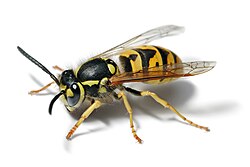
Yellow jackets are aggressive stinging wasps that nest underground and in cavities. Late-summer colonies are large, so nest removal is best left to professionals.
Yellow jackets are stout black-and-yellow wasps that nest out of sight in the ground, in wall voids, and in other cavities. A nest entrance can be a small hole in the lawn or a gap in a wall.
Early in the season colonies are small, but they grow through the summer and can hold thousands of workers by late summer and fall.
Yellow jackets are far more aggressive than paper wasps, especially near the nest and late in the season.
Because nests are hidden and colonies are large and defensive, do-it-yourself removal is risky. Professional treatment is the safest approach for most nests.
Find the ground or cavity entrance by watching wasp traffic.
Professional treatment handles large, defensive colonies without driving them indoors.
Explore services →Seal cavities after treatment and manage food and trash outdoors.
Request an estimate →Treatments are selected and applied per their labels. Tell us about children, pets, edible gardens, beehives, and other sensitive areas before service, and follow all preparation and re-entry instructions. More on pet- and pollinator-conscious treatment →
Yellow jackets are stockier, nest in hidden cavities and underground, and are much more aggressive, especially in late summer. Paper wasps build open nests under eaves and are generally less defensive.
Colonies reach their largest size and food becomes scarce, so workers scavenge widely and defend the nest fiercely, raising the chance of stings.
It is risky. Hidden nests and large, defensive colonies make professional treatment the safest choice, especially near walkways or if anyone is allergic.
Guidance changes over time. Follow current product labels and local recommendations. This page is educational and is not medical advice.
Call or email for a free estimate. We’ll recommend an approach that fits your property.