
Inspect
Find where the pest is entering, breeding, or harboring on the property.
Pest Education • DFW Pest Control
Fruit flies swarm ripe produce and drains, breeding in places you can't see. Learn how to find and eliminate the source.
Reviewed and updated June 2026
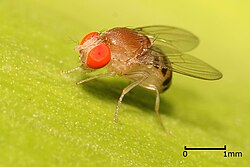
Fruit flies breed in fermenting produce and the film inside drains. Finding and cleaning the breeding source is the only lasting fix.
Fruit flies are tiny tan flies, often with red eyes, that swarm around ripe and fermenting produce. They are weak fliers that hover near the kitchen counter, fruit bowl, trash, and sink.
They breed in fermenting organic matter, including overripe fruit and vegetables and the thin film of residue inside drains, garbage disposals, and recycling bins, where eggs and larvae are hidden from view.
Killing adult flies does nothing if the breeding source remains. The fix is finding and cleaning every place they reproduce.
Find where the pest is entering, breeding, or harboring on the property.
Match the approach to the pest and conditions, not just the ones you see.
Explore services →Reduce moisture, food, and entry points so the problem does not come back.
Request an estimate →Treatments are selected and applied per their labels. Tell us about children, pets, edible gardens, beehives, and other sensitive areas before service, and follow all preparation and re-entry instructions. More on pet- and pollinator-conscious treatment →
They often arrive on produce as eggs, then multiply in fermenting fruit and the organic film inside drains and disposals, which is why they seem to appear overnight.
Because the breeding source is still there. Adults are easy to trap, but until you clean the produce, drains, and residue where they reproduce, new flies keep emerging.
Remove overripe produce, clean drains and disposals, wipe up organic film, and set a vinegar trap for the remaining adults while sources are cleaned.
Guidance changes over time. Follow current product labels and local recommendations. This page is educational and is not medical advice.
Call or email for a free estimate. We’ll recommend an approach that fits your property.