Inspect
Find where the pest is entering, breeding, or harboring on the property.
Pest Education • DFW Pest Control
Those tiny gnats around your houseplants are fungus gnats, breeding in damp potting soil. Learn how to dry them out and clear them.
Reviewed and updated June 2026
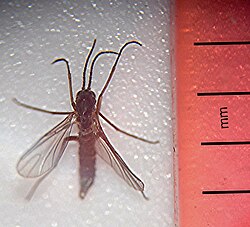
Fungus gnats breed in consistently moist potting soil and feed on fungi and roots. Letting soil dry is the single most effective control step.
Fungus gnats are tiny, dark, weak-flying gnats that hover around houseplants and windows. The adults are a nuisance, but the real problem is the larvae in the soil, which feed on fungi, decaying matter, and sometimes tender roots.
They thrive in consistently damp, organically rich potting mix, so overwatered plants are the usual source.
Drying out the breeding soil is the most effective step, since the larvae cannot survive in dry conditions.
Find where the pest is entering, breeding, or harboring on the property.
Match the approach to the pest and conditions, not just the ones you see.
Explore services →Reduce moisture, food, and entry points so the problem does not come back.
Request an estimate →Treatments are selected and applied per their labels. Tell us about children, pets, edible gardens, beehives, and other sensitive areas before service, and follow all preparation and re-entry instructions. More on pet- and pollinator-conscious treatment →
Fungus gnats breed in damp potting soil. Overwatering and rich, constantly moist mix create ideal conditions for their larvae.
Let the soil dry between waterings, improve drainage, trap adults with yellow sticky cards, and use a labeled soil treatment if needed. Drying the soil is most important.
They do not bite people and are mainly a nuisance, though heavy larvae populations can stress seedlings and tender roots.
Guidance changes over time. Follow current product labels and local recommendations. This page is educational and is not medical advice.
Call or email for a free estimate. We’ll recommend an approach that fits your property.