
Inspect
Find where the pest is entering, breeding, or harboring on the property.
Pest Education • DFW Pest Control
Silverfish are teardrop-shaped, moisture-loving insects that damage paper and fabrics. Learn where they hide and how to dry them out.
Reviewed and updated June 2026
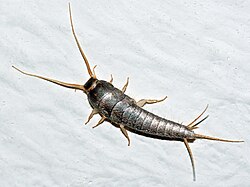
Silverfish thrive in humid, dark spaces and feed on starches in paper, glue, and fabrics. Reducing humidity is the foundation of control.
Silverfish are small, silvery, teardrop-shaped insects that move with a fish-like wriggle. They are nocturnal and hide in humid, dark places such as bathrooms, closets, basements, attics, and storage boxes.
They feed on starches and sugars found in paper, book bindings, wallpaper glue, cardboard, and some fabrics, so damaged papers or yellow stains are common signs.
Silverfish depend on humidity, so drying out their environment is the most effective step, paired with reducing food and harborage.
Find where the pest is entering, breeding, or harboring on the property.
Match the approach to the pest and conditions, not just the ones you see.
Explore services →Reduce moisture, food, and entry points so the problem does not come back.
Request an estimate →Treatments are selected and applied per their labels. Tell us about children, pets, edible gardens, beehives, and other sensitive areas before service, and follow all preparation and re-entry instructions. More on pet- and pollinator-conscious treatment →
Humidity and starchy materials. Damp bathrooms, closets, and storage with paper, cardboard, and fabrics are ideal, so reducing moisture is the key control step.
They do not bite or carry disease, but they damage books, papers, wallpaper, and fabrics, and indicate excess moisture worth correcting.
Reduce humidity, seal and store starchy items, fix leaks, declutter storage, and treat harborage areas. Drying the environment is the most important step.
Guidance changes over time. Follow current product labels and local recommendations. This page is educational and is not medical advice.
Call or email for a free estimate. We’ll recommend an approach that fits your property.