Inspect
Find where the pest is entering, breeding, or harboring on the property.
Pest Education • DFW Pest Control
Chiggers are larval mites that leave intensely itchy welts after time in tall grass. Learn how to reduce them in the yard.
Reviewed and updated June 2026
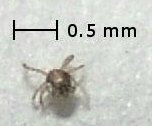
Chiggers are larval mites that bite in grassy, brushy, humid areas. Mowing, reducing humidity, and yard treatment lower their numbers.
Chiggers are the larval stage of a type of mite. They are nearly invisible and wait in tall grass, weeds, and brushy, humid areas, then climb onto a passing host to feed.
Contrary to myth, they do not burrow into skin or suck blood. They feed on skin cells and drop off, but the reaction leaves intensely itchy welts, often where clothing is snug.
Chiggers concentrate in overgrown, humid vegetation, so yard management is the foundation of control, paired with personal protection.
Find where the pest is entering, breeding, or harboring on the property.
Match the approach to the pest and conditions, not just the ones you see.
Explore services →Reduce moisture, food, and entry points so the problem does not come back.
Request an estimate →Treatments are selected and applied per their labels. Tell us about children, pets, edible gardens, beehives, and other sensitive areas before service, and follow all preparation and re-entry instructions. More on pet- and pollinator-conscious treatment →
No. That is a myth. They feed on skin cells at the surface and drop off; the intense itching is a reaction to their feeding, not a buried insect.
In tall grass, weeds, and brushy, humid areas. Keeping vegetation mowed and dry greatly reduces encounters.
Mow regularly, clear brush and leaf litter, reduce shade and moisture, buffer wooded edges, and treat high-traffic areas during peak season.
Guidance changes over time. Follow current product labels and local recommendations. This page is educational and is not medical advice.
Call or email for a free estimate. We’ll recommend an approach that fits your property.