Inspect the Property
Identify brushy edges, tall grass, shaded leaf litter, and wildlife pathways where ticks concentrate.
Pest Education • DFW Pest Control
Ticks wait in tall grass and shaded yard edges, and a few species in North Texas can transmit disease. Learn how ticks get into a yard, which ones matter here, and what reduces them.
Reviewed and updated June 2026
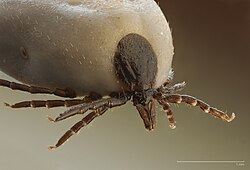
Learn which ticks live in North Texas, the diseases they can carry, how they get into a yard, and how to reduce ticks around a DFW property.
Ticks are not insects but small arachnids related to spiders and mites. They feed on the blood of mammals, birds, and reptiles, and they find hosts by climbing onto grass tips and brush and waiting to grab onto anything that brushes past, a behavior called questing.
In the DFW area, the lone star tick, American dog tick, and brown dog tick are among the most commonly encountered. The brown dog tick is unusual in that it can complete its whole life cycle indoors, which makes kennel and home infestations possible.
Different ticks carry different pathogens, so the species present shapes the actual risk. In Texas, concerns include ehrlichiosis, Rocky Mountain spotted fever, and the alpha-gal red-meat allergy associated with lone star tick bites. Classic Lyme disease is far less common in Texas than in the Northeast, but other illnesses are present.
Yard habitat management is the foundation of tick control. Ticks concentrate at the shaded, brushy edges of a property rather than in open, sunny, well-kept turf, so reducing that habitat lowers encounters.
A targeted treatment focuses on those edge and harborage zones, and is most effective when paired with landscape changes and veterinary tick prevention for pets.
Identify brushy edges, tall grass, shaded leaf litter, and wildlife pathways where ticks concentrate.
Yard layout, habitat, season, and sensitive areas should shape the plan, alongside veterinary pet prevention.
Explore services →Habitat management and follow-up treatment keep edge populations down through the season.
Request an estimate →Products should be selected and applied according to their labels. Tell us about pets, beehives, butterfly gardens, edible plants, ponds, play areas, or other sensitive locations so treatment timing and placement can be planned responsibly. On-animal tick prevention should come from your veterinarian.
Keep people and pets out of treated areas for the time specified on the label and follow all preparation and re-entry instructions.
The lone star tick, American dog tick, and brown dog tick are among the most commonly encountered in the DFW area. The species present affects which diseases are a concern.
Ticks are usually carried in by wildlife and pets, then wait on tall grass and shaded leaf litter at the edges of a yard. Wooded borders, brush, and tall vegetation are the highest-risk zones.
Remove it promptly with fine-tipped tweezers by pulling straight out, clean the area, and watch for rash or fever. Contact a healthcare professional if symptoms develop or if you are unsure.
Public-health guidance changes. Follow current local, state, and federal recommendations. This page is educational and is not medical advice.
Call or email for a free estimate. We’ll recommend an approach that fits your property.